Sustainability in Action
From everyday practices to long-term initiatives, we’re committed to protecting and enhancing our natural spaces for future generations.

What does sustainability look like at the Park District?
Sustainability is engraved throughout the Park District of Oak Park. We integrated sustainability into our Comprehensive Master Plan, committed to sustainability as a Core Value, identified key initiatives in our Strategic Plan, and our Sustainability Plan charts a course for future environmental stewardship.
Our biennial Sustainability Plan outlines goals, initiatives, and programs to implement that maintain and further the Park District’s sustainability commitments in ten areas:
- Community and Patron Education and Engagement
- Employee Education, Training, and Engagement
- Fleet Management
- Health and Wellness
- Natural Resources and Habitat Preservation
- Recycling and Solid Waste Management
- Sustainable Acquisition and Use of Agency Supplies
- Sustainable Infrastructure and Natural Areas
- Utility and Energy Conservation
- Water Conservation and Management
Through various initiatives we’ve reduced our environmental footprint, with ongoing efforts to further mitigate resource depletion. Our holistic sustainability strategy includes waste reduction, energy efficiency, green energy production, education, water conservation/reuse, native habitats, green procurement policies, and more.
In addition, we calculate dollar savings each year through our sustainability efforts.

Promoting Sustainability at the Park District
Who is responsible for promoting sustainability at the Park District?
The Sustainability Committee, composed of Park District employees, meets regularly to advocate for the Sustainability Plan and work towards accomplishing its goals.
In addition, the Environmental Sustainability Advisory Committee contributes to the enactment of these sustainability programs and acts as a communication channel between the Park District and Oak Park residents.
Native Plants, Bioswales, Gardens

Initiative Details
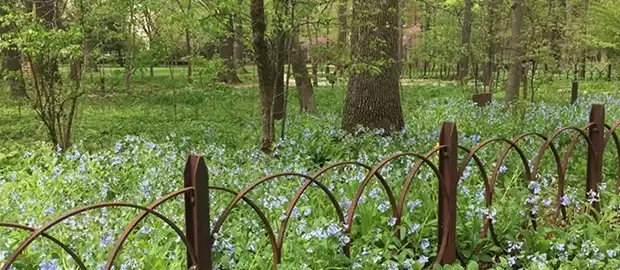
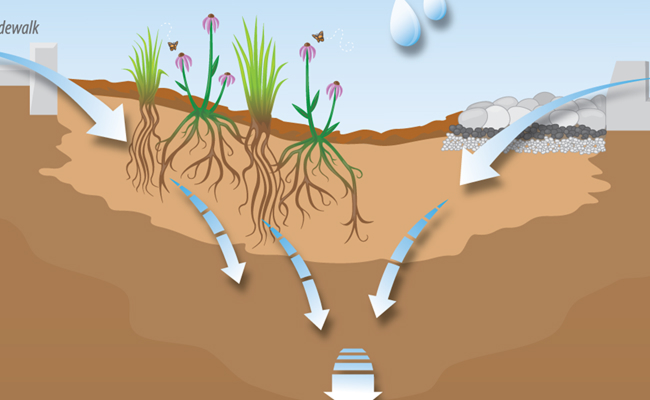
All 18 parks and 19 facilities have native plantings as part of their landscape. This practice reduces labor costs as well as improves food sources for insects and birds. The community has seen an increase in monarch butterflies based on a community-wide effort to increase milk weed and other pollinator plantings.
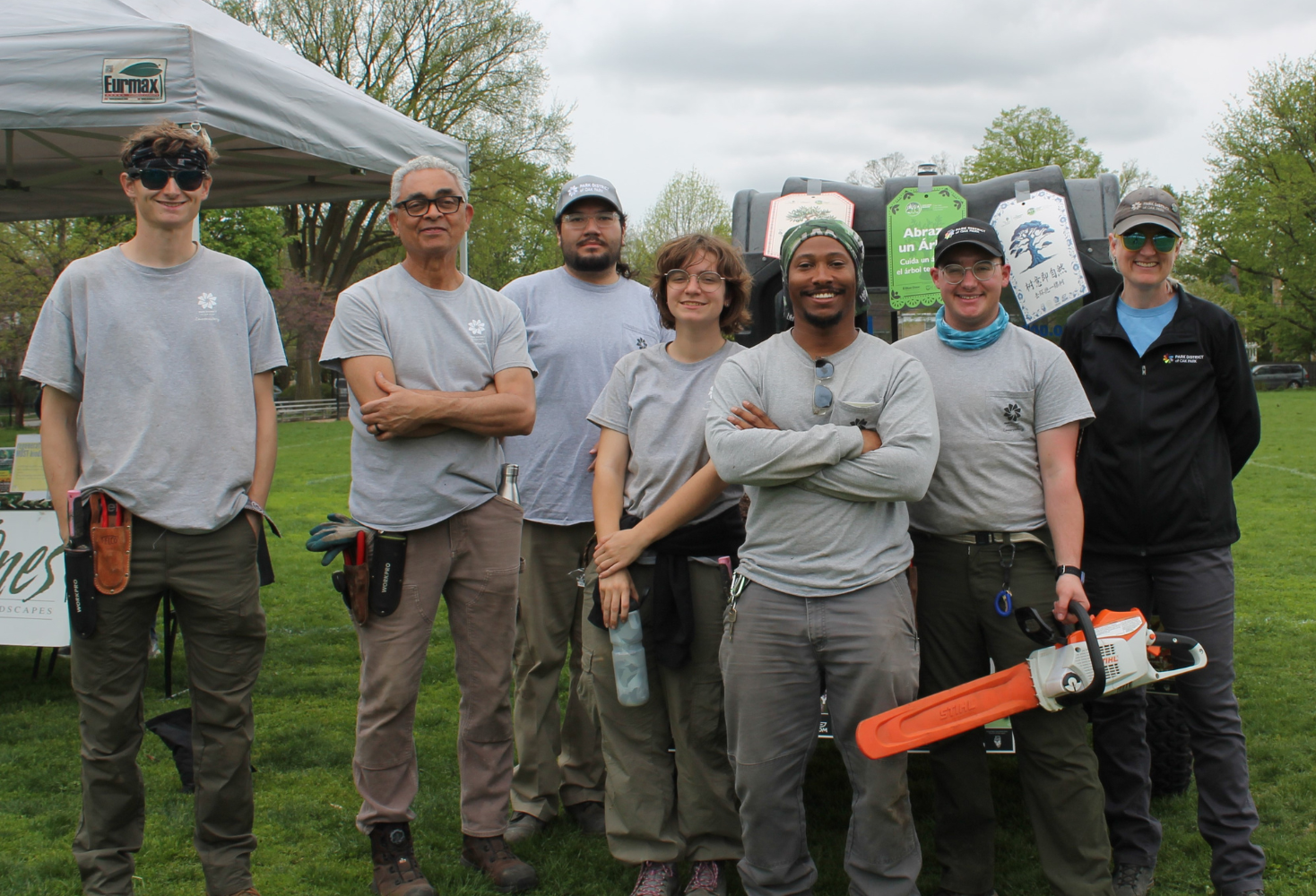
Bioswales across the District help prevent the flow of pollutants into freshwater ecosystems and provide a natural way to manage storm water in an urban setting. Over 250 plant species that support pollinators can be found in our bioswales located at the Oak Park Conservatory, Barrie Park, and Community Recreation Center.
The All-Abilities Garden at Cheney Mansion grows copious amounts of vegetables every summer. The Park District donates over 500 pounds of fresh produce from the garden to the Oak Park River Forest Food Pantry each year.
LED Lighting

Initiative Details
LED lighting is present in all Park District parks and facilities, with funding sources from ComEd grants covering nearly 50% of the total cost for an annual savings of $80,692.
Interior Lighting: Converted 38,754 watts to 16,780 watts, which is a 43% reduction in energy usage and an annual savings of $13,650 in energy costs.
Exterior Lighting: Converted park walk lights and exterior court and field lights reducing energy consumption by 587KW per year and saving $67,042 annually.
Solar Panels

Initiative Details
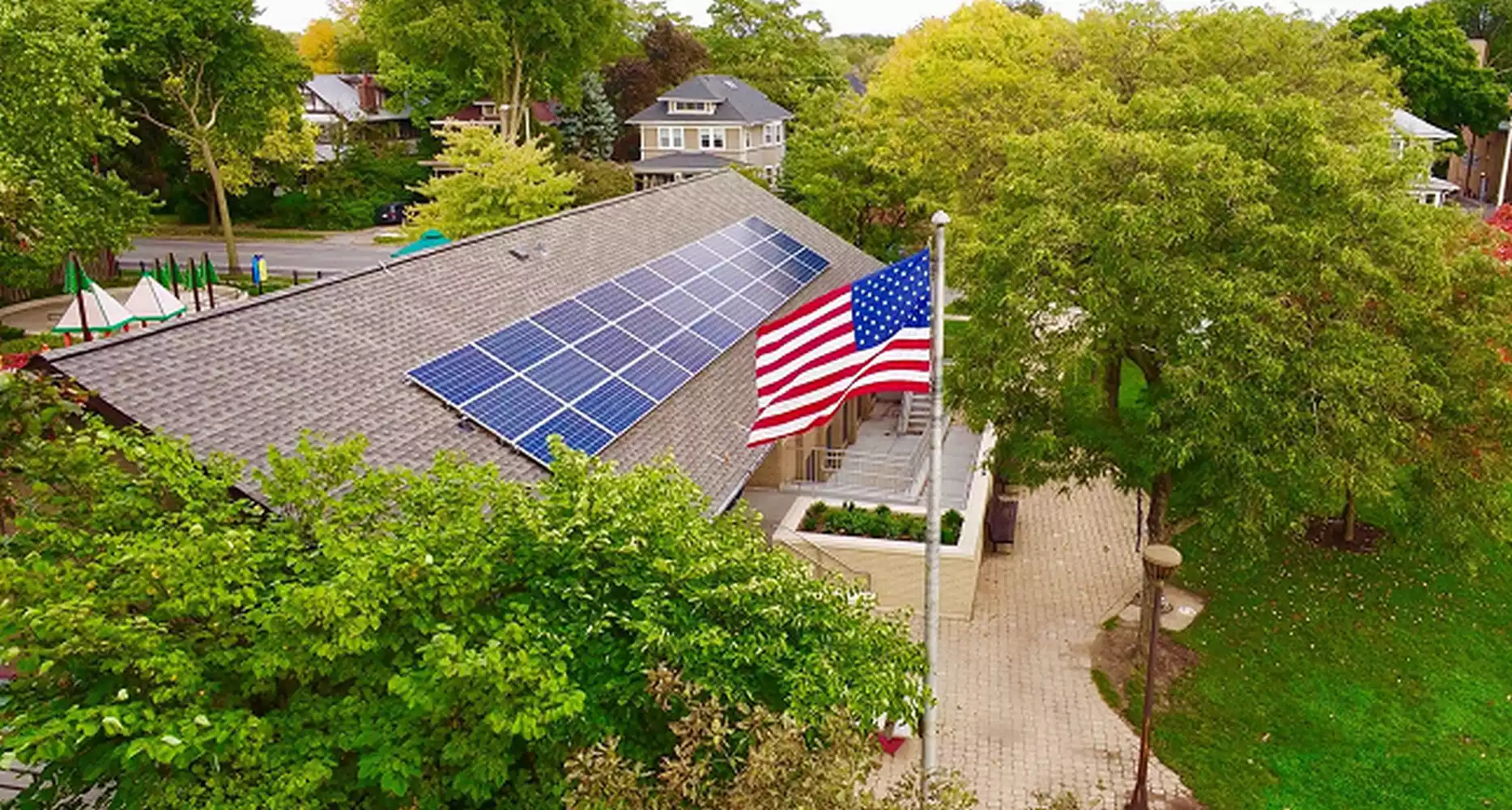
Eleven Park District facilities housing over 1,364 solar panels currently generate over 828 MWh (828,000 kWh) of green energy annually. This energy generation is equal to 78 homes or 692 acres of U.S. forests in one year. Annual carbon reduction is estimated to be 587 metric tons of CO2.
Water

Initiative Details
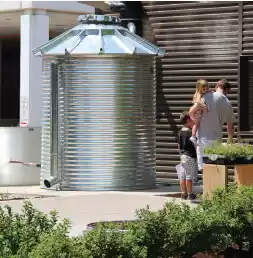
Five cisterns installed across various Park District locations re-purpose water, collecting water for irrigation and toilet flushing. These systems conserve around 1,250,000 gallons of water and save $94,479 annually. Cisterns are situated at Field Park, Longfellow Park, Oak Park Conservatory, and the Austin Gardens Environmental Education Center.
EV Charging Stations

Initiative Details
Eight dedicated parking spots with EV charging stations allow CRC visitors to charge electric vehicles while vising the Center.
Sustainable Facilities

Initiative Details
Austin Gardens Environmental Education Center: Platinum LEED Certification, Geothermal system, solar panel system, rainwater harvesting cistern, rain gardens, green roof, high efficiency building envelope.
Ridgeland Common Recreation Complex: Gold LEED Certification, Solar panel system, high efficiency HVAC system, native landscaping, reuse of existing, original roof structure.
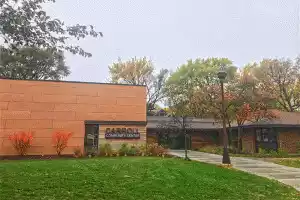
Carroll Center: Passive House Design/Certification, Source Zero Energy Certification, Geothermal system, super insulation, solar panel system, electrical load monitoring, rain garden.
Community Recreation Center: All-Electric, ILFI Net Zero Certified, high
efficient VRF/heat pump HVAC system, Solar array and Battery backup system, high efficient building envelope, rain garden, permeable pavers, electric load monitoring, daylighting and occupancy lighting & outlets
Carry In/Carry Out

Initiative Details
We ask for the community’s help and cooperation in being a good park steward and keeping our parks clean through our Carry In/Carry Out program. Park patrons are asked to carry out all waste and recyclables they bring into the park.
Composting

Initiative Details
Composting takes place across our parks and facilities, including staff breakrooms, helping reduce waste and return valuable organic material back to the earth. Collection efforts at major locations, including the Oak Park Conservatory, Cheney Mansion, and Ridgeland Common, support a greener and more environmentally responsible community.
Additional Sustainability Practices
In 2015-2016, the Park District conducted a study on alternative weed control methods after the Environmental Sustainability Committee made recommendations to consider in place of glyphosate. Check out the study results here!
Oak Park is Illinois’ first and the nation’s fourth municipal arboretum, a designation that came from decades of commitment to nurturing, diversifying, and protecting its urban forest. The Park District of Oak Park and the Village share responsibility for more than 21,000 trees on public property throughout Oak Park’s four and a half square miles.
Austin Gardens Environmental Center, Carroll Center, and Pleasant Home are equipped with geothermal systems with a total capacity of 57.2 tons (686,400 BTUs) providing energy-efficient climate control. Sixteen geothermal wells were installed at Cheney Mansion, with the system scheduled to begin providing heating and cooling in 2026.
Completed for all properties using ICLEI software.
The diverse species mix originally planted at Lindberg Park in 2000 was lost due to the invasion of aggressive plant species such as Canada thistle, tall goldenrod and New England aster. The Park District’s Green Advisory Committee worked with the Park District to oversee plans to restore the plantings in the Trial Gardens to recreate the desired plant diversity. The first phase of plantings were completed in June 2012. Successive phasing continues yearly as well as specialized, ongoing maintenance of this unique area.
Contact Patti Staley (opens email app) to learn more.
The Park District partnered with the West Suburban Openlands Treekeepers and the Morton Arboretum to save hundreds of 200- to 300-year old oak trees as part of the Heritage Oak Propagation Program. Grown from acorns back in 2008, a total of 51 of these living treasures were planted in 2015 in Scoville, Mills, Taylor and Field Parks. The nurturing and planting of these trees enhances biodiversity and is part of the District’s broader strategy to use natives whenever possible to best support our environment.
The Park District of Oak Park conducts prescribed burns of the native plant areas for the purpose of improving the health of the plantings. Prescribed burning is perhaps the most important tool in successfully managing restored ecosystems. Because our native plant communities have evolved with periodic fires occurring naturally, the native plant areas in our parks also depend upon regular burning to thrive.
Rain gardens were installed at the Austin Gardens Environmental Education Center, Carroll Park, Stevenson Park, and Euclid Square Park. Similar to a bioswale, rain gardens are planted with deep-rooted native wildflowers, grasses, and shrubs that filter storm water runoff by removing nutrients, sediments, and pollutants before entering groundwater and waterways.
The Park District has a trailer fitted with solar panels that is used to transport electric maintenance equipment from park to park. While equipment is in the trailer, it uses energy collected from the solar panels to charge.
Inoculating trees is the most effective tool for combating Dutch Elm disease, which was decimating our Elm tree population. The Park District invests in our Heritage Elms by inoculating 24 mature, healthy, American Elms per the recommended treatment cycle. The decision was made to treat these trees to try and preserve these living treasures throughout the park system.
The Park District of Oak Park is committed to the highest possible level of management for all natural resources represented in our parks. The Park District maintains a tree inventory identifying the age, condition and location of all trees throughout the parks system using GIS software.